 MidiAI Studio
Guide �� Piano & polyphony
Converting Piano to MIDI: The Ideal Case
If you could design an instrument to be easy for a computer to transcribe, you would build something very much like a piano. Its notes begin with a sharp, unambiguous attack, sit at fixed pitches, and decay predictably ? a near-ideal combination for the kind of analysis audio-to-MIDI performs.
This is not luck; it is physics. The piano's mechanism produces exactly the acoustic clarity that transcription thrives on, which is why piano-to-MIDI consistently outperforms conversion of instruments with softer onsets or sliding pitches. Understanding why helps you exploit the advantage fully.
This guide explains the acoustic reasons piano is the transcriber's favorite instrument and how to make the most of them with MidiAI Studio. Whether you are capturing your own playing or a recording, knowing why piano converts so well lets you push its accuracy even higher.
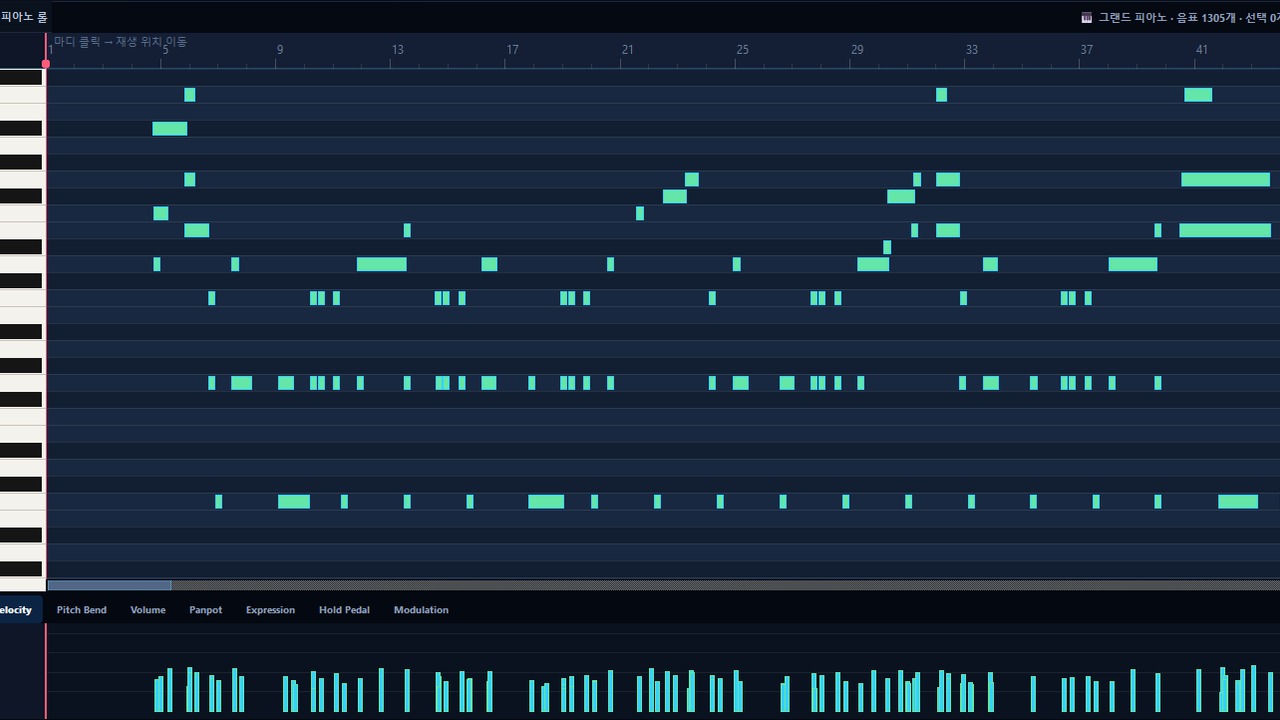
The percussive attack that makes piano readable
Piano-to-MIDI conversion is the transcription of piano audio into note data, capturing pitch, timing, duration, and velocity. It is distinguished by its reliability, because the piano's acoustic properties align unusually well with what transcription algorithms need.
The result is an editable piano part reflecting not just the notes but how hard each was struck, making it suitable for detailed study, arrangement, and re-performance across different sounds.
Fixed pitches versus the ambiguity of sliding tones
A piano note is born from a hammer striking a string, producing a brief, energetic onset that transcription locks onto with ease. This sharp attack marks the start of each note precisely, so timing detection is far more accurate than with instruments that swell in gradually, like bowed strings or breath-driven winds.
The piano's pitches are also fixed and discrete ? there is no bending or sliding between notes as on a fretless string or a voice ? so each sounding tone maps cleanly onto a specific MIDI pitch. MidiAI Studio benefits from this determinacy, resolving even dense chords into definite notes rather than fuzzy pitch regions.
Velocity adds a uniquely direct signal. On a piano, how hard a key is struck maps almost linearly to how loud the note sounds, so the engine can estimate MIDI velocity from the audio with real fidelity, capturing the performer's touch. The main complication remains the sustain pedal, whose ringing overlaps must be sorted from genuine new attacks.
Handling the piano's enormous polyphony
Capturing a Debussy prelude with fine dynamic shading
Consider a Debussy prelude in D-flat major, full of delicate dynamic shading from the softest pianissimo to sudden swells, recorded cleanly on a good piano. This is music where touch is everything, and piano's transcription strengths shine.
MidiAI Studio captures not only the notes but the graded velocities, so the converted part reproduces the prelude's dynamic contour rather than flattening it. The fixed pitches resolve the impressionist chords cleanly, and the sharp attacks place the rhythm accurately even in rubato passages.
The pedal, generous in Debussy, leaves a few ringing tones to trim, but the core capture is remarkably faithful. The converted part becomes a study of the composer's voicing and dynamics, editable and re-voiceable while preserving the performance's expressive shape.
Velocity as a direct window into touch
- Record or source a clean piano signal. Capture the piano with clear, close sound and minimal room wash. The cleaner the recording, the more fully piano's natural transcription advantages come through.
- Preserve velocity to keep the touch. Retain the transcribed velocities rather than flattening them. Piano's near-linear touch-to-loudness relationship makes its dynamics unusually faithful and worth keeping.
- Sort pedal ring from real attacks. Identify and trim tones that ring from the sustain pedal rather than being newly struck. This pedal cleanup is the main manual task in piano conversion.
- Split the hands for clarity. Separate the part across treble and bass so dense two-hand writing stays legible. Hand separation makes editing and study far easier.
- Turn the capture into a study aid. Slow, loop, and isolate voices to learn from the performance. Piano's accurate capture makes it excellent raw material for detailed practice.
The sustain pedal's blessing and curse
- Favor close, dry piano recordings to maximize onset clarity.
- Keep velocity data intact to preserve the performer's dynamic shading.
- Trim sustain-pedal ring so durations reflect what was actually played.
- Separate hands before detailed editing for a readable part.
- Exploit the accurate capture for slow-practice and voicing study.
Register overlap in dense two-hand writing
- Recording in a washy room: Excess reverb blurs the sharp onsets that give piano its transcription edge.
- Flattening dynamics: Discarding velocity throws away the faithful touch data piano uniquely provides.
- Leaving pedal ring untrimmed: Ringing tones overlap into an inaccurate, cluttered representation of the playing.
- Keeping hands merged: A single stream makes dense two-hand passages hard to read and edit.
- Underusing the capture: A faithful piano transcription wasted as a static file misses its study potential.
Turning a converted piano part into a study aid
It is genuinely elegant how the piano's design serves transcription. Every choice that makes the instrument expressive for a player ? the decisive hammer strike, the tempered fixed pitches, the wide dynamic range ? also makes it legible to a machine. Player and algorithm end up wanting the same clarity, which is why piano is the reference case for what audio-to-MIDI can achieve.
The velocity fidelity deserves special appreciation because it is where a transcription stops being a note list and becomes a performance. A piano capture that preserves the graded touch of a phrase carries the musician's intent, not just their pitches, and MidiAI Studio's ability to recover that shading is much of what makes piano conversion feel alive rather than mechanical.
Where even piano conversion meets its edges
Even the pedal, the one persistent complication, teaches something useful. It is the point where the instrument's expressiveness exceeds what a simple note-on, note-off model can capture, forcing a judgment about where one note ends and its resonance begins. Learning to hear that boundary sharpens both your transcriptions and your ear for the instrument.
The practical conclusion is that piano rewards ambition. Because the capture is so reliable, you can push into detailed study ? analyzing voicing, comparing dynamic choices, learning difficult passages at slow speed ? with confidence that the data reflects the real performance. The instrument's transcription-friendliness turns conversion from a novelty into a serious tool for growth.
FAQ
Straight answers for musicians researching piano MIDI conversion tips. Expand any question?answers stay on this page so you do not bounce away mid-read.
What makes piano easier to convert to MIDI than other instruments?
Its notes have sharp, percussive onsets and fixed, discrete pitches, which give transcription precise timing and unambiguous pitch. Instruments with gradual onsets or sliding pitches are much harder to read accurately.
Does piano-to-MIDI capture how hard I played each note?
Yes, unusually well. On a piano, striking force maps nearly linearly to loudness, so the engine estimates MIDI velocity from the audio with real fidelity, preserving your dynamic shading.
Why do sustain-pedal notes complicate piano conversion?
The pedal lets notes ring and overlap, and lingering tones can be misheard as new attacks, producing phantom notes and over-long durations. Sorting ringing tones from genuine strikes is the main cleanup task.
Can piano conversion handle dense chords across a wide range?
Generally yes, because the piano's fixed pitches let the engine resolve simultaneous notes into definite pitches. Very quiet inner voices in a thick chord remain the trickiest to catch.
How should I use a converted piano performance to improve my playing?
Slow it down, loop difficult passages, and isolate individual voices to study voicing and dynamics. Piano's accurate, velocity-rich capture makes it excellent, editable practice material.