 MidiAI Studio
Guide �� Audio file conversion
Converting an MP3 Recording Into MIDI Notes
MP3 is the format that made music portable, and it did so by throwing information away. Every MP3 is the result of a codec deciding which sounds a listener probably will not miss and deleting them ? a bargain that works beautifully for listening and imperfectly for transcription.
That bargain matters the moment you try to convert an MP3 to MIDI, because transcription depends on exactly the fine spectral detail that compression targets for removal. The result is still useful, often very useful, but it is shaped by decisions an encoder made long before you opened the file.
This guide is about working with that reality rather than against it. It explains what an MP3 actually hands MidiAI Studio, how bitrate sets your quality ceiling, and how to squeeze the cleanest possible transcription out of whatever file you happen to have.
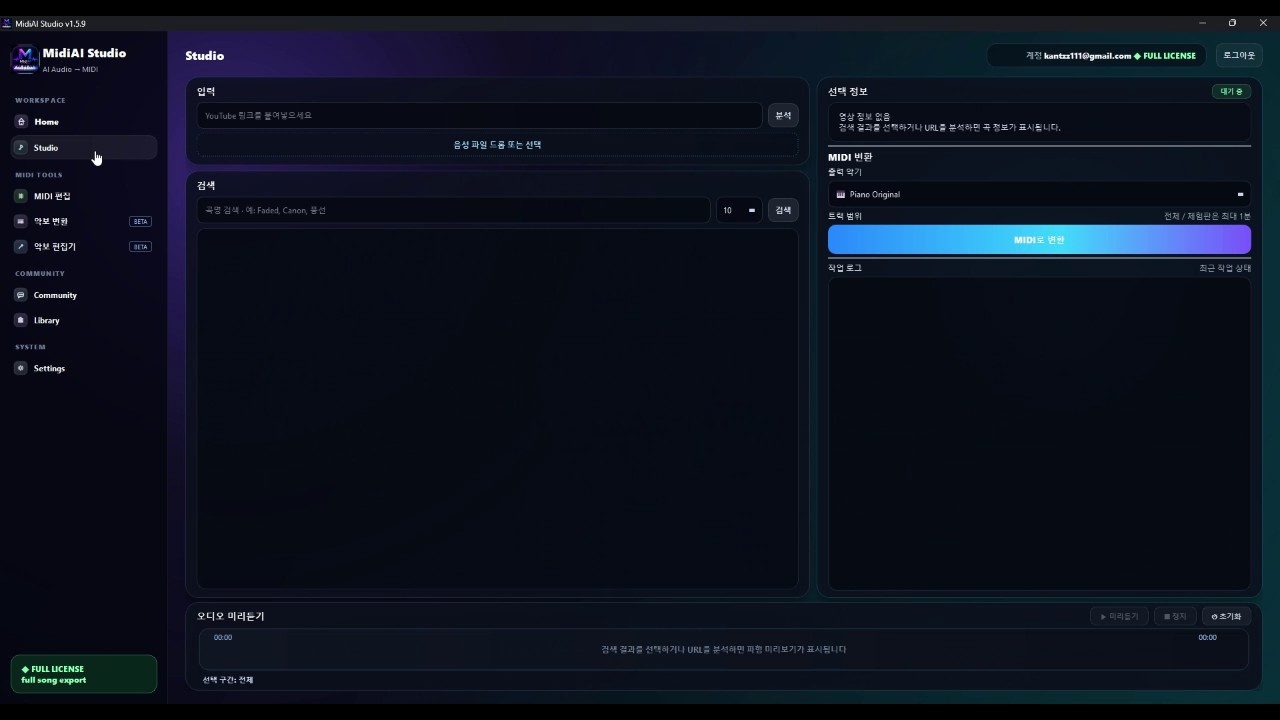
How MP3 compression decides what your MIDI can contain
Converting MP3 to MIDI means transcribing a lossily-compressed audio file into note data. The defining feature is that the source has already been stripped of some acoustic detail, so the transcription reflects a reduced version of the original performance rather than the full recording.
MP3 stores sound using perceptual coding, keeping what the ear notices and discarding what it tends to mask. That is invisible to a listener but consequential to a transcriber, because some of the masked detail is precisely what distinguishes overlapping notes.
Bitrate as the ceiling on transcription detail
The engine reads the MP3's frequency content the same way it reads any audio, but it is reading a spectrum with holes in it. Higher frequencies and quiet details that the encoder judged inaudible are simply gone, which most affects bright, transient sounds and the tails of decaying notes.
Bitrate is the single most important number here. A 320 kbps MP3 retains far more of the original spectrum than a 128 kbps file, so MidiAI Studio has more to work with and produces cleaner onsets and fewer errors. Below about 128 kbps, transcription quality degrades noticeably because too much of the useful detail is missing.
Compression artifacts can also masquerade as musical events. The pre-echo and smearing that low-bitrate encoding introduces around sharp transients can be misread as faint notes, so an MP3-sourced transcription often needs a pass to remove artifacts that were never played at all.
Why cymbals and reverb tails confuse MP3-sourced MIDI
Transcribing the same solo bass line from 320 and 128 kbps
Picture a clean electric bass line in E minor, walking steadily at 96 BPM, that you have as both a 320 kbps and a 128 kbps MP3. The performance is identical; only the compression differs.
From the 320 kbps file, MidiAI Studio transcribes the bass almost perfectly ? clear onsets, correct pitches, tight timing. From the 128 kbps version, the low end is slightly muddier, a couple of onsets soften, and one artifact near a hard pluck registers as a phantom high note that you delete.
Neither result is useless, but the higher-bitrate source is plainly better and took less cleanup. Given the choice, the extra kilobits translate directly into fewer minutes fixing the transcription afterward.
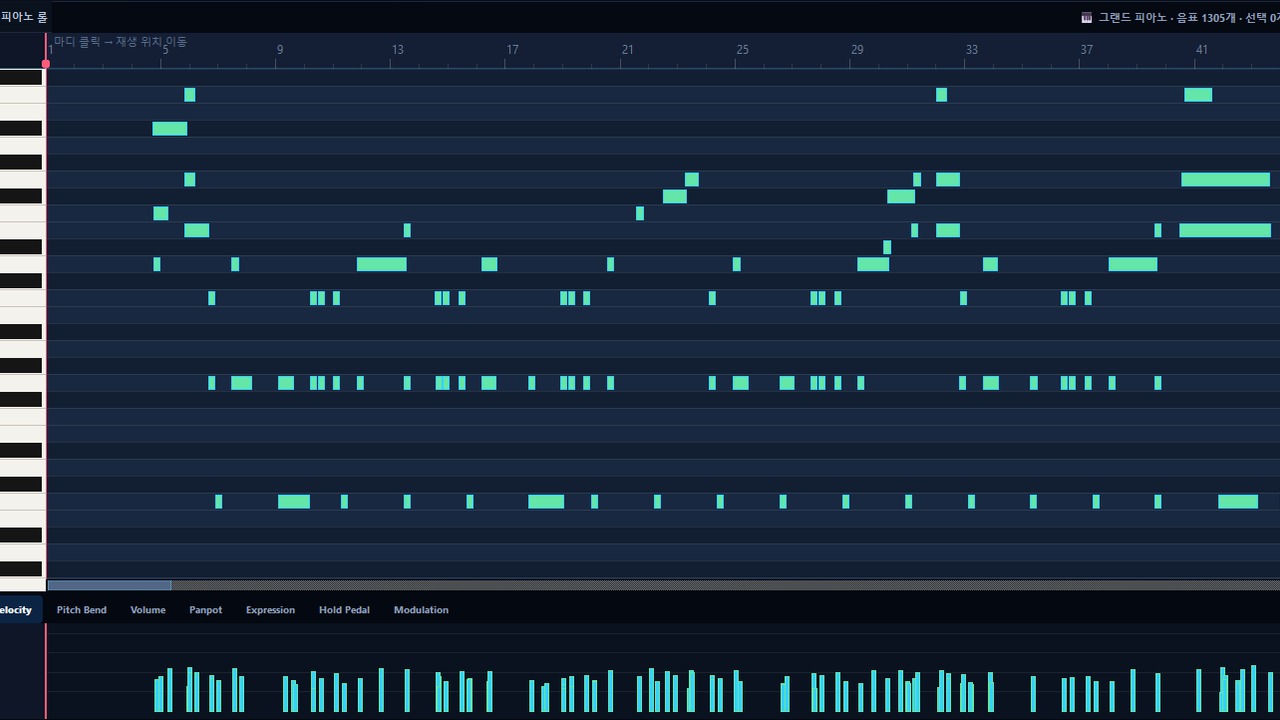
Mono versus stereo MP3s for instrument separation
- Check the file's bitrate first. Before converting, look at whether you have a 320 kbps file or something far lower. The bitrate tells you the quality ceiling and how much cleanup to expect, so you can set realistic goals.
- Prefer a lossless source if one exists. If the same recording is available as WAV or FLAC, use it instead. A lossless file preserves the detail MP3 discarded, giving the transcription more to work with.
- Isolate the target instrument. As with any audio, separate the part you want from the mix before transcribing. An exposed instrument transcribes far better than one buried under others in a compressed file.
- Prune compression artifacts. Watch for faint phantom notes near sharp transients that are encoding artifacts, not performance. Removing them first clears the way to refine the real part.
- Rebuild what compression flattened. Restore dynamics and note tails that the lossy source thinned out. The transcription gives you accurate pitches; you supply the expression the MP3 could not carry.
Getting a usable part from a low-bitrate file
- Treat 320 kbps as your minimum comfortable bitrate for serious transcription.
- Never re-encode an MP3 to a higher bitrate hoping to recover detail ? it cannot come back.
- Transcribe exposed instruments from an MP3 before attempting buried ones.
- Listen for pre-echo around hard attacks so you recognize artifacts as artifacts.
- Keep the original file untouched in case you later find a better source to compare.
When to hunt for a lossless source instead
- Expecting lossless quality from a low bitrate: A 96 kbps file simply lacks the detail for a clean transcription; plan for heavier cleanup.
- Re-encoding upward for quality: Bumping an MP3 to 320 kbps adds no information; the discarded detail is permanently gone.
- Transcribing a dense mix as-is: Compression plus overlap makes buried instruments especially fragmentary; isolate first.
- Mistaking artifacts for notes: Encoding smear near transients reads as phantom notes if you do not prune it.
- Ignoring available lossless copies: Using an MP3 when a WAV exists throws away quality for no reason.
Cleaning MP3 artifacts out of a transcription
Understanding MP3 as a perceptual bargain reframes the whole task. The codec is not lazy; it is exploiting the fact that human hearing masks certain sounds, deleting them to save space. Transcription simply happens to care about some of those masked sounds, which is why a file that is sonically transparent to your ears can still be lossy to the engine.
The practical corollary is that bitrate is destiny. No transcription tool can recover information the encoder removed, so the most impactful thing you can do happens before conversion: find the highest-quality version of the recording available. MidiAI Studio works with the spectrum it is given, and a richer spectrum simply yields a better part.
Matching your expectations to the file you have
Artifacts deserve a wary respect. The same compression that removes real detail also adds spurious detail in the form of pre-echo and smearing, so an MP3-sourced transcription can err in both directions ? missing quiet real notes and inventing phantom ones. Knowing both failure modes makes your cleanup pass much faster.
For all these caveats, MP3-to-MIDI remains genuinely valuable because most of the world's casual audio lives as MP3. A transcribed bass line, riff, or melody from an MP3 is a real creative asset, and with a decent bitrate and a little cleanup the results are often better than newcomers expect.
FAQ
Straight answers for musicians researching extract MIDI notes from MP3. Expand any question?answers stay on this page so you do not bounce away mid-read.
Does converting an MP3 to MIDI lose quality because MP3 is compressed?
It is limited rather than corrupted ? MP3 already discarded acoustic detail that transcription would have used. You get a usable result, but a lossless source of the same recording would yield a cleaner one.
What bitrate should an MP3 be for a good MIDI transcription?
Aim for 320 kbps or higher. Above that threshold the spectrum retains enough detail for clean onsets, while files below 128 kbps degrade transcription noticeably.
Can I improve an MP3 before converting by re-encoding it?
No ? re-encoding cannot restore detail the original compression removed. The best you can do is find a higher-quality source of the same recording.
Why does my MP3 transcription have faint notes I never heard?
Low-bitrate encoding introduces smearing around sharp attacks that can register as phantom notes. Deleting these compression artifacts is a normal part of cleaning an MP3-sourced transcription.
Is a stereo MP3 better than mono for converting to MIDI?
Stereo can help when instruments are panned apart, since separation aids isolation. But the bigger factor is bitrate and how exposed your target instrument is in the mix.