 MidiAI Studio
Guide �� MIDI editing craft
The Fundamentals of Editing MIDI
Every MIDI file, however it was created, is editable with the same small set of core skills. Whether your notes came from a keyboard performance, an audio transcription, or a PDF conversion, editing them comes down to manipulating four properties and understanding a few interface concepts. Master those and every MIDI file bends to your will.
Beginners often feel overwhelmed by a piano roll full of colored bars, but the underlying model is genuinely simple. There are only so many things you can do to a note, and once you internalize them, the apparent complexity dissolves into a handful of confident moves.
This guide teaches those fundamentals from the ground up, assuming no prior editing experience. With these basics, you can clean up a MidiAI Studio conversion, shape a performance, or restructure an arrangement ? the same skills serve every task.
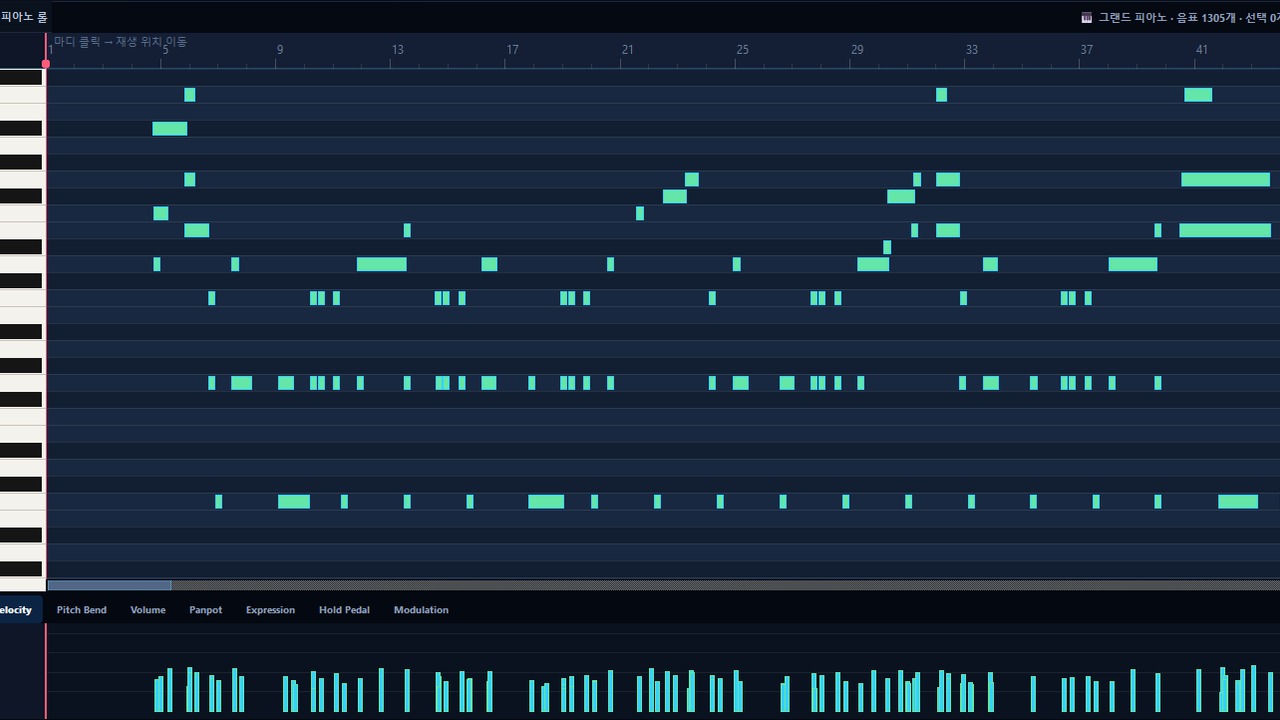
The four things you can edit in any MIDI note
MIDI editing is the manipulation of the individual note events in a MIDI file ? changing their pitch, start time, duration, and velocity, and rearranging them structurally. It is the craft of reshaping recorded or converted note data into exactly the music you intend.
At its core, every edit acts on one of four note properties or on the arrangement of notes in time, which means the whole discipline rests on a small, learnable foundation rather than an endless list of features.
Working in the piano roll versus notation view
A MIDI note has exactly four editable properties: pitch (which note it is), start time (when it begins), duration (how long it lasts), and velocity (how hard it was struck). Every edit you will ever make changes one or more of these, so understanding them individually is the whole conceptual basis of MIDI editing.
The piano roll is where most editing happens, showing pitch on the vertical axis and time on the horizontal, with each note as a bar you can move, lengthen, or drag to a new pitch. The grid and snap settings determine how notes align to beats, and MidiAI Studio, like any editor, lets you toggle snap so you can choose between quantized precision and free placement.
Structural editing operates above the note level, letting you select regions and copy, paste, loop, or delete whole sections. This is how you repeat a chorus, remove an intro, or duplicate a pattern, and combined with the four note properties it gives you complete control over both the details and the shape of a piece.
Selecting, moving, and resizing notes precisely
Cleaning up a converted melody step by step
Suppose you have a converted eight-bar melody in C major that needs four small fixes: one wrong pitch, a note that starts slightly late, a note held too long, and a flat, uniform dynamic feel. These four fixes exercise every core skill.
In the piano roll you drag the wrong note up two semitones to correct its pitch, nudge the late note back onto the beat with snap on, shorten the over-long note by dragging its right edge, and then draw a gentle velocity rise across the phrase to give it shape. Four moves, four properties.
Finally you select the whole eight bars and copy them to build a repeat, adjusting the last note for a proper ending. Using only the fundamentals ? pitch, timing, duration, velocity, and structural copy ? you turned a rough MidiAI Studio conversion into a polished, shaped phrase.
Editing velocity to shape dynamics
- Learn the four note properties. Understand that every note has a pitch, start time, duration, and velocity, and that all editing changes these. This mental model makes every tool in the editor make sense.
- Get comfortable in the piano roll. Practice selecting, moving, and resizing notes in the piano roll, where pitch is vertical and time horizontal. Fluency here underlies almost all MIDI editing.
- Use the grid and snap deliberately. Turn snap on for precise, beat-aligned edits and off for free placement. Knowing when to use each keeps your timing edits both accurate and expressive.
- Shape dynamics with velocity. Edit velocity to create crescendos, accents, and contrast. Velocity is what turns a flat, mechanical sequence into music with feeling.
- Edit structure with copy and loop. Select regions to copy, paste, loop, and delete whole sections. Structural editing lets you reshape a piece's form, not just its details.
Understanding the grid and snap
- Think in terms of the four note properties for every edit.
- Build piano-roll fluency before worrying about advanced features.
- Toggle snap consciously to balance precision and expression.
- Use velocity actively rather than leaving dynamics flat.
- Work on a copy so your original conversion is always safe.
Copy, paste, and looping structural sections
- Editing without understanding the four properties: Poking at tools blindly is slow; the property model makes every edit intentional.
- Fighting the piano roll: Avoiding it for the notation view limits precise control over timing and velocity.
- Leaving snap on for everything: Rigid snapping can strip expressive timing where free placement is wanted.
- Ignoring velocity: Flat dynamics leave the music sounding mechanical no matter how correct the notes.
- Editing the only copy: Working destructively on the original risks losing your clean starting point.
Non-destructive habits that protect your work
The single most empowering realization for a beginner is that MIDI editing has a small, closed vocabulary. There are only four note properties and a handful of structural operations, so the entire discipline is learnable in an afternoon of practice rather than being an endless expanse of features. Everything advanced is just these fundamentals combined and automated.
The piano roll deserves to be embraced rather than feared, because it is the most honest view of what MIDI actually is. Notation adds a layer of interpretation, but the piano roll shows the raw truth ? pitch against time, each note a tangible object you can grab. Fluency there translates directly into control over MidiAI Studio conversions and any other MIDI you touch.
Building speed with keyboard shortcuts
Velocity is the property beginners most often neglect and the one that most separates lifeless from living music. Correct pitches and rhythms with flat dynamics sound like a machine, while the same notes with thoughtful velocity shaping sound like a performance. Treating velocity as a first-class part of every edit is a habit that pays off immediately.
Above all, non-destructive habits turn editing from a nervous act into a confident one. Working on a copy, keeping your original conversion safe, and knowing that every change is reversible frees you to experiment boldly. The musicians who edit best are not the most cautious but the most fearless, precisely because they have made their mistakes cost nothing.
FAQ
Straight answers for musicians researching MIDI editing after AI conversion. Expand any question?answers stay on this page so you do not bounce away mid-read.
What can you actually change about a MIDI note?
Exactly four things: its pitch, its start time, its duration, and its velocity. Every MIDI edit, no matter how advanced it looks, comes down to changing one or more of these properties.
Should I edit MIDI in the piano roll or the notation view?
The piano roll is best for precise control over timing and velocity and is where most editing happens, while notation view suits reading and score-oriented work. Beginners benefit most from building piano-roll fluency first.
What does snap-to-grid do when editing MIDI?
It makes notes align to beat divisions as you move or place them, giving quantized precision. Turning snap off allows free placement for expressive timing, so you choose based on whether you want accuracy or nuance.
Why does my edited MIDI still sound mechanical?
Usually because the velocities are flat and uniform. Shaping velocity into crescendos, accents, and contrast is what gives a sequence dynamic life, so actively editing it is essential for musical results.
How do I repeat or restructure a section of MIDI?
Select the region and use copy, paste, loop, and delete to rearrange whole sections. Structural editing operates above individual notes, letting you reshape a piece's form as easily as its details.