 MidiAI Studio
Guide �� YouTube & covers
Using Converted YouTube MIDI to Actually Learn Piano
Watching a piano video teaches you what the music sounds like; converting it to MIDI teaches you how to play it. A video plays once, at one speed, and hides the left hand behind camera angles. MIDI you can slow, loop, split into hands, and read along with ? it turns a performance into a curriculum.
Most self-taught pianists hit the same wall: they can hear the piece but cannot see it clearly enough to reproduce it. Converting the performance closes that gap by making every note visible and every tempo adjustable, so practice becomes deliberate instead of guesswork.
This guide treats conversion as a study method, not a party trick. Using MidiAI Studio to turn a favorite YouTube performance into MIDI, you can build a genuinely effective practice loop ? the kind that moves a hard passage from impossible to automatic.
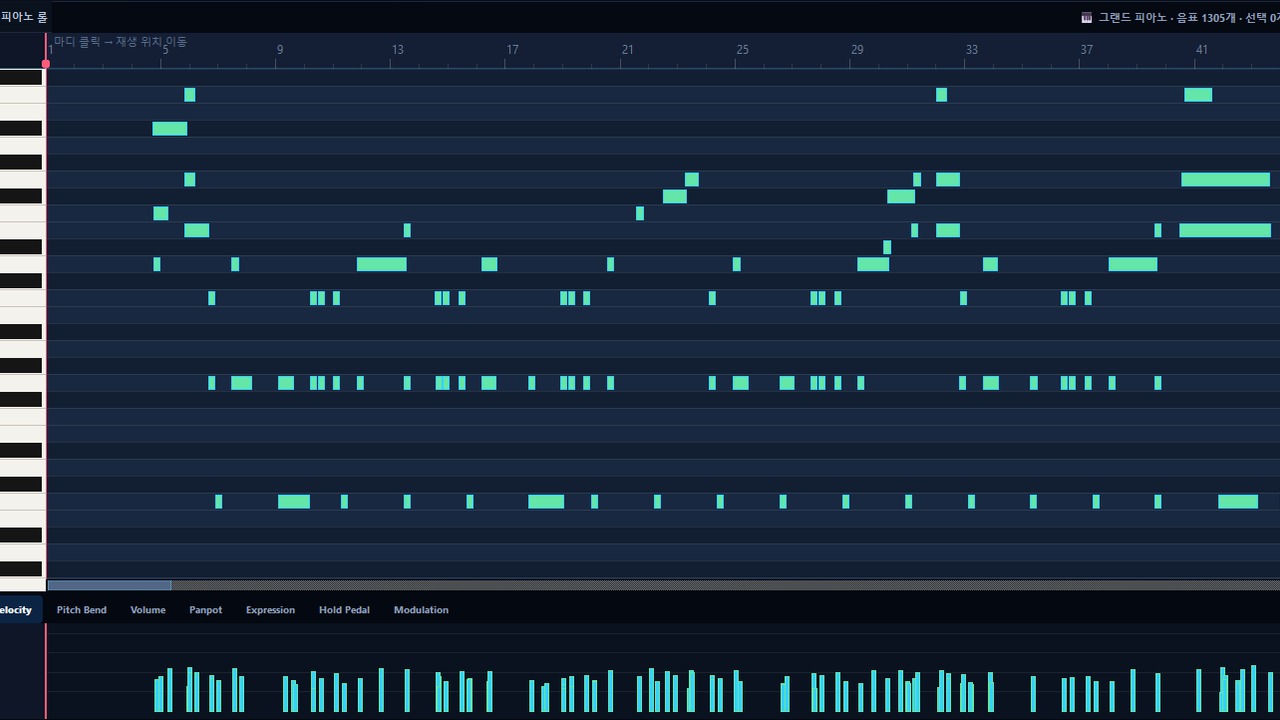
Why MIDI beats a video for actually practicing
Learning piano from converted YouTube MIDI means using a transcription as interactive practice material: adjustable in tempo, splittable by hand, loopable by section, and readable as a scrolling roll. The performance stops being something you watch and becomes something you work with.
The method rests on a simple premise: effective practice needs visibility and control. A video offers neither at the granularity a learner needs, while MIDI offers both, letting you isolate exactly the four bars and the one hand that need work.
Slowing a passage without changing its pitch
Tempo scaling is the foundation, and MIDI makes it clean. Because the notes are data rather than recorded audio, slowing to half speed does not drop the pitch or introduce artifacts ? every note simply sounds later, letting you see and hear a fast run at a pace your hands can follow. MidiAI Studio's transcription is what makes this possible from any video.
Looping turns repetition into progress. Isolating the two bars of a difficult transition and playing them on repeat, gradually raising the tempo, is the single most effective way to internalize a passage ? and it is trivial with MIDI where a section is just a selection you loop.
Hands-separate study becomes available the moment voices are on their own tracks. Muting the right hand to drill the left, or vice versa, lets you build each hand's confidence before combining them, which is how difficult coordination is actually learned rather than merely attempted.
Looping the four bars that keep tripping you up
Learning a fast arpeggio passage from a converted etude
Suppose you found a YouTube performance of a Romantic etude in A minor with a right-hand arpeggio passage at 132 BPM that is far beyond your current speed. Watching it at full tempo teaches you nothing except that it is hard.
Converted with MidiAI Studio, the passage becomes practice material. You slow it to 80 BPM to see the finger pattern clearly, loop the trickiest four bars, and mute the left hand so you can focus entirely on the arpeggio shape without coordination pressure.
Over a week you nudge the loop from 80 to 132 in small steps, adding the left hand once the right is secure. The passage that was a blur in the video becomes a piece you can play, because MIDI let you practice it the way it actually needed to be practiced.
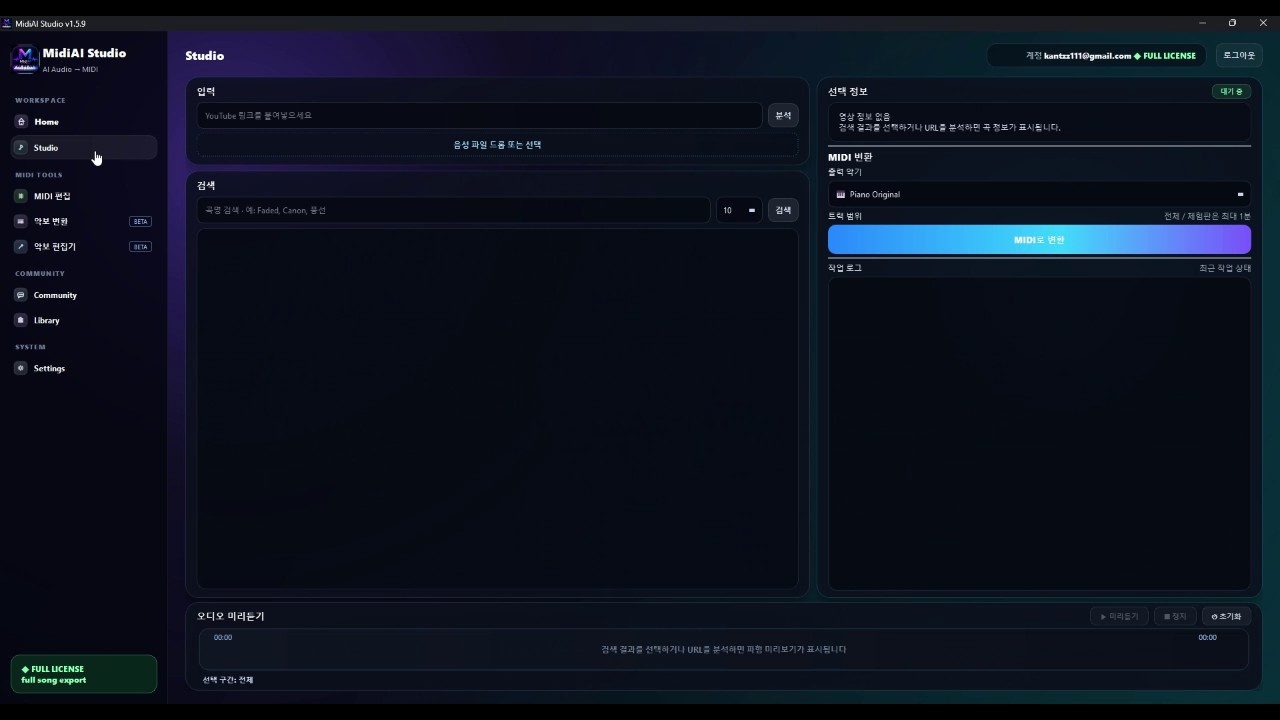
Reading along with a scrolling piano roll
- Convert the performance and verify the hard part. Transcribe the video, then check that the passage you want to learn came through accurately. There is no point drilling wrong notes, so confirm the tricky section against your ear first.
- Slow it to a tempo you can watch. Drop the speed until you can clearly see each note and finger pattern. Because MIDI scales tempo without changing pitch, the slowed version stays musically faithful.
- Loop the smallest failing unit. Isolate the two to four bars that trip you up and loop them. Practicing the exact failure point is far more efficient than replaying the whole piece hoping it improves.
- Drill hands separately, then together. Mute one hand to build the other, then combine them. Separating the coordination problem into two smaller problems is how hard passages actually get learned.
- Ramp tempo gradually toward the target. Raise the loop speed in small increments only after each is clean. Steady, earned acceleration beats forcing full tempo before your hands are ready.
Hands-separate practice from a converted part
- Practice at the fastest tempo you can play cleanly, not the fastest you can stumble through.
- Keep loops small; two well-drilled bars beat sixteen half-learned ones.
- Read along with the scrolling roll to connect what you hear to what you play.
- Record yourself against the reference to hear gaps your fingers hide.
- Retire a loop only when it is clean three times in a row, then move on.
Checking your playing against the reference
- Practicing wrong transcribed notes: Drilling an uncorrected passage cements mistakes; verify the section before you loop it.
- Looping too large a section: Big loops dilute practice on the actual failure point and slow progress.
- Skipping hands-separate work: Attempting both hands before either is secure guarantees the coordination never solidifies.
- Jumping straight to full tempo: Forcing target speed before control is built ingrains tension and errors.
- Never checking yourself against the reference: Without comparison you drift from the model and reinforce your own inaccuracies.
Building a graded practice queue from covers
The deepest reason this method works is that it converts passive admiration into active problem-solving. A video invites you to watch a pianist succeed; a converted MIDI invites you to isolate exactly why you cannot yet, and to attack that reason directly. The shift from spectator to practitioner is the whole point.
Slow practice is not a compromise but a technique, and MIDI removes its usual cost. Ordinarily slowing recorded audio degrades it; with note data the slow version is as clean as the fast one, so you lose nothing by practicing at the speed your nervous system can actually encode. Speed then emerges as a byproduct of accuracy.
Knowing when a transcription is good enough to learn from
Loop discipline is where most learners under-invest. The instinct is to play from the top, but progress lives in the two bars you keep missing, and MIDI makes those two bars addressable in a way sheet music and video never did. Treat the loop as your primary tool and the run-throughs as occasional tests.
Finally, this approach quietly builds musicianship beyond the piece at hand. Reading along with a MidiAI Studio transcription trains your eye-to-hand connection, comparing your playing to the reference sharpens your ear, and dissecting an arrangement teaches you how music is built. The song is the excuse; the skills are the reward.
FAQ
Straight answers for musicians researching learn piano with YouTube MIDI. Expand any question?answers stay on this page so you do not bounce away mid-read.
Can I slow down a converted performance without it sounding lower in pitch?
Yes ? because MIDI is note data, not recorded audio, slowing the tempo spaces the notes out without dropping their pitch. You hear the same music, just slower and clearer.
How small should my practice loop be when learning a hard passage?
As small as the problem itself, often just two to four bars. Looping the exact spot that fails you concentrates practice where it counts instead of diluting it across the whole piece.
Why practice hands separately from a converted MIDI part?
Because coordination is easier to build when each hand is already secure. Muting one hand lets you master the other, so combining them becomes assembly rather than a new struggle.
How do I know when a transcription is accurate enough to learn from?
Verify the specific passage you intend to study against your ear before drilling it. As long as the section you are practicing is correct, minor errors elsewhere will not affect your learning.
What tempo should I actually practice a converted passage at?
The fastest tempo at which you can play it cleanly, then raise it only when that is secure. Practicing accurately at a slower speed builds far faster than stumbling at full speed.