 MidiAI Studio
Guide �� YouTube & covers
Turning YouTube Piano Covers Into MIDI You Can Study
If audio-to-MIDI has a happy place, it is the solo piano cover. One instrument, clear onsets, and a texture the engine was practically designed to read make covers the most rewarding source you can feed a transcriber. The results are often clean enough to study bar by bar.
But a cover is more than a stream of notes ? it is an arrangement, a particular musician's take on a song, complete with their voicings, their reharmonizations, and their expressive timing. Transcribing it well means respecting those choices, not just capturing pitches.
This guide is aimed at the musician who wants to learn from covers: to see how an arranger voiced a chorus, to slow a run down and play along, to lift a reharmonization into their own playing. MidiAI Studio makes the capture easy; understanding the arrangement makes the capture meaningful.
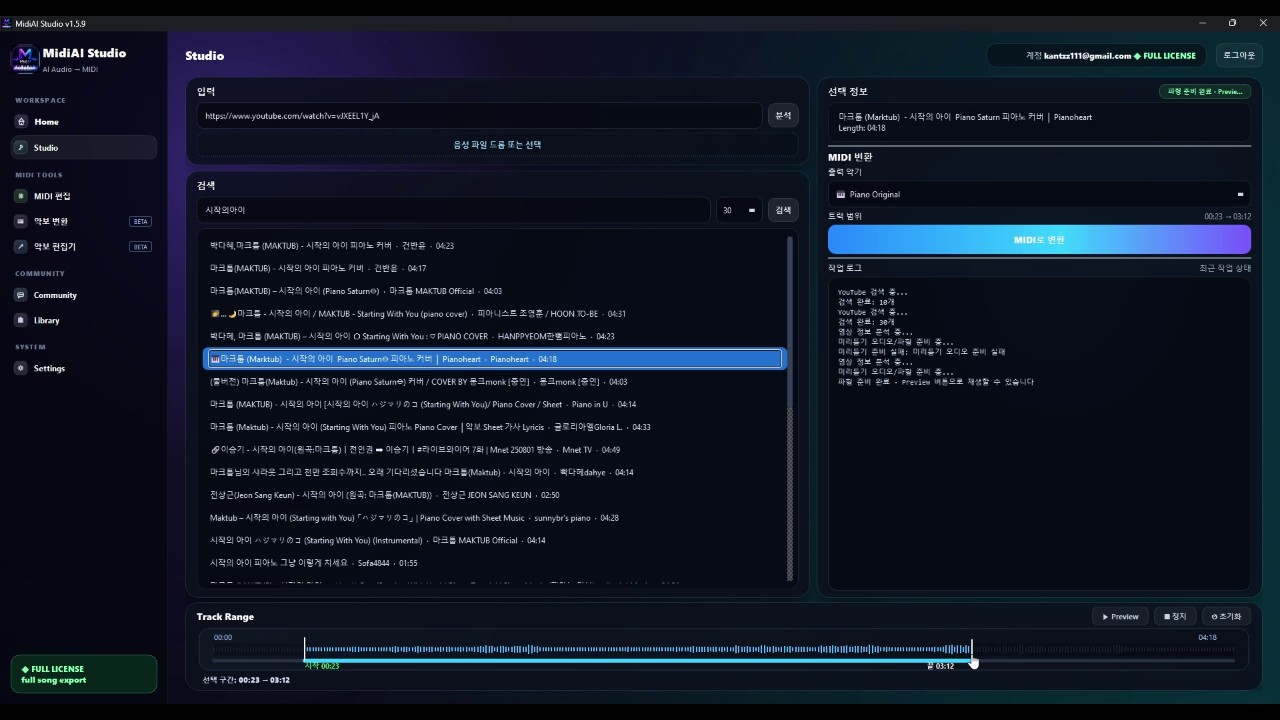
Why solo piano covers are the ideal transcription source
Converting a piano cover to MIDI means transcribing a solo-piano recording into note data you can view, slow down, transpose, and play alongside. Because the source is a single exposed instrument, the transcription can be detailed enough to serve as a study score.
What sets covers apart from other audio sources is arrangement intent. You are not capturing a canonical piece but one performer's interpretation, so the MIDI reflects their specific voicings and liberties ? which is exactly what makes covers such rich learning material.
Reading a cover's arrangement, not just its notes
Because a piano is monophonic per key but polyphonic overall, the engine tracks many simultaneous pitches from one instrument, following melody, inner voices, and bass together. Solo piano gives it clean, unmasked onsets, so MidiAI Studio can resolve a full chord and the melody riding on top of it with real precision.
The sustain pedal is the characteristic complication. When a pianist holds the pedal, notes ring into each other and the engine can hear lingering tones as if they were newly struck, producing phantom notes. Recognizing which sustained tones are real attacks versus pedal blur is central to a clean cover transcription.
Arrangement choices show up directly in the data. A cover that reharmonizes the original will transcribe the new chords faithfully, and one that adds a countermelody will render it as an independent line. The transcription is a mirror of the arranger's decisions, which is precisely its educational value.
Sustain pedal and the phantom-note problem it creates
Studying a reharmonized pop ballad cover in D-flat major
Take a popular solo-piano cover of a pop ballad, played in D-flat major at a flexible 68 BPM, where the arranger has swapped the original's plain triads for lush major-seventh and add-nine voicings. You want to understand exactly what they did.
Transcribed in MidiAI Studio, the extended chords come through with their added tones visible, and the melody sits clearly above the accompaniment. A few pedal-blurred bass notes appear as slightly long, and one ghost note from a sustained chord needs deleting ? quick fixes given how much the transcription reveals.
Now the cover becomes a lesson. You slow it to half tempo to see how the arranger voices the pre-chorus, isolate the left hand to study the walking bass, and transpose the whole thing to C to compare it against the original sheet music. The MIDI turned a performance into a tutor.
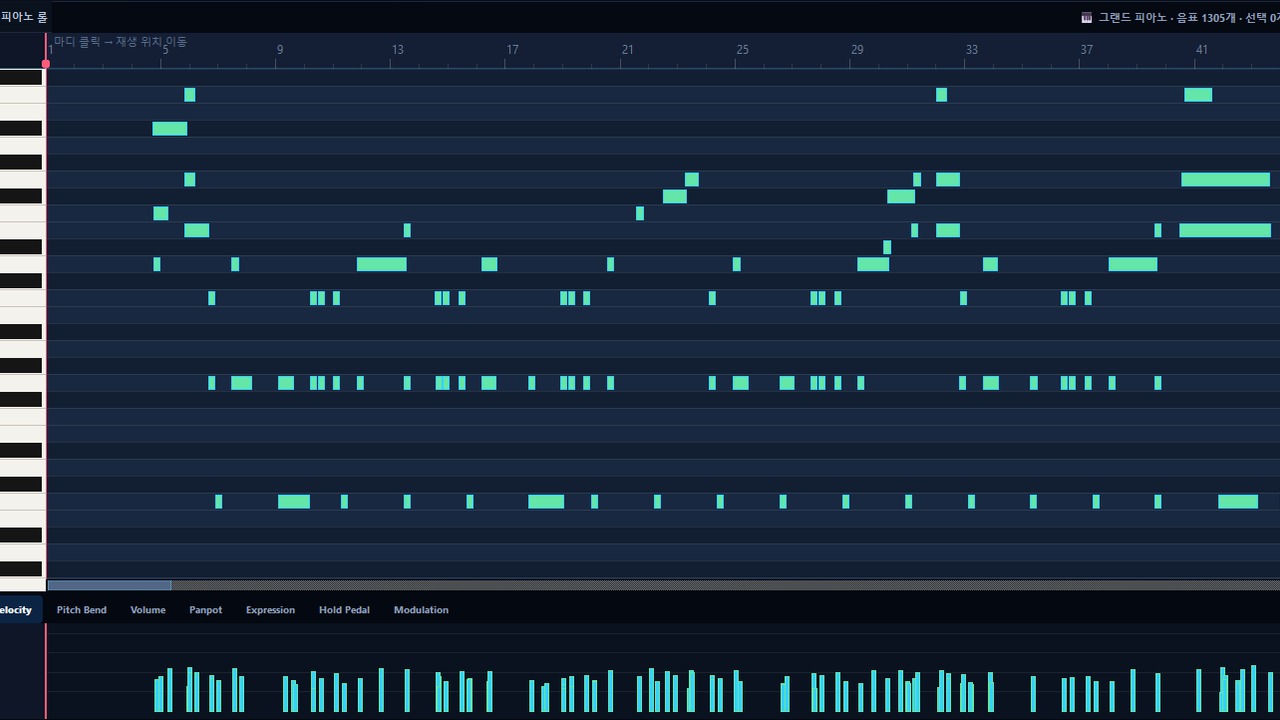
Voicing: separating melody from accompaniment
- Pick a clean, well-recorded cover. Favor covers with close, clear piano sound and minimal added reverb. The cleaner the recording, the more of the arrangement's detail survives into the transcription.
- Transcribe the full texture, then separate voices. Capture melody, inner voices, and bass together, then split them onto tracks. Voice separation is what lets you study the melody and accompaniment independently.
- Hunt down pedal ghost notes. Listen for notes that ring longer than played and delete phantom attacks from sustained chords. Cleaning pedal artifacts is the main manual task in a cover transcription.
- Preserve the arranger's rubato. Keep the flexible tempo rather than forcing a grid, so the phrasing that defines the cover stays intact for study and play-along.
- Build practice versions. Make a slowed copy for learning and a transposed copy for comparison. Turning the transcription into practice tools is where its value pays off.
Handling arrangers who reharmonize the original
- Choose covers by pianists known for clean recording, not just great playing.
- Separate melody and accompaniment early so each can be studied on its own.
- Trim over-long pedal notes to their real durations for a truthful score.
- Keep an untouched transcription so your practice edits never overwrite the capture.
- Compare the cover's harmony against the original to spot the reharmonization clearly.
Capturing tempo rubato in an expressive cover
- Picking a reverb-drenched cover: Heavy reverb blurs onsets and multiplies ghost notes, obscuring the arrangement you wanted to study.
- Leaving voices merged: A single combined track makes it impossible to isolate the melody or bass for focused practice.
- Ignoring pedal artifacts: Phantom sustained notes clutter the score and misrepresent what the pianist actually played.
- Quantizing away the rubato: Forcing a grid erases the expressive timing that gives the cover its character.
- Editing the only copy: Overwriting the raw transcription loses your faithful capture if a practice edit goes wrong.
Turning a transcription into a practice tool
There is a real ethical texture to transcribing covers that is worth naming. A cover arrangement is itself a creative work, and lifting it note for note is closer to studying a teacher than copying a fact. Approaching it as learning ? understanding the choices rather than merely harvesting them ? keeps the practice honest and, frankly, more useful.
Technically, covers reward attention to the pedal more than any other factor. A pianist's pedaling is expressive, and the same sustain that makes a performance beautiful is what smears the transcription. Learning to hear the difference between a struck note and a ringing one is a skill that improves both your transcriptions and your listening.
Respecting the arranger behind the cover
The educational payoff is enormous precisely because MIDI is manipulable. A cover on YouTube plays at one speed in one key; the same cover as MIDI can be slowed, transposed, looped, and dissected voice by voice. MidiAI Studio effectively converts a passive performance into an interactive lesson you control.
The best habit is to transcribe covers you want to grow from, not just enjoy. When the arrangement teaches you something ? a voicing, a reharmonization, a rhythmic feel ? the transcription becomes part of your vocabulary rather than a trophy on a hard drive. That is when converting covers stops being a trick and becomes a practice.
FAQ
Straight answers for musicians researching step-by-step YouTube piano MIDI. Expand any question?answers stay on this page so you do not bounce away mid-read.
Why are solo piano covers considered the best audio-to-MIDI source?
Because a single exposed instrument has clear, unmasked note onsets that transcription can follow precisely. There are no competing instruments to disentangle, so even dense chords resolve cleanly.
How do I deal with sustain-pedal notes that transcribe as extra notes?
Sustained tones can be misheard as new attacks, creating phantom notes. Listen for notes that ring longer than played and delete the false attacks to get a truthful transcription.
Can I study an arranger's chord voicings from a converted cover?
Absolutely ? that is one of the best uses. The transcription renders extended and added-tone chords with their notes visible, so you can see exactly how the arranger voiced each moment.
Should I keep the cover's expressive timing when converting?
Yes, if you want to study or play along authentically. Preserving the rubato keeps the phrasing that defines the interpretation, rather than flattening it to a mechanical grid.
How do I turn a converted cover into a practice aid?
Make a slowed-down copy to learn passages and a transposed copy to compare against the original. Isolating individual voices onto their own tracks lets you drill melody or bass alone.