 MidiAI Studio
Guide �� AI & MIDI fundamentals
How AI MIDI Conversion Actually Works
AI MIDI conversion can feel like a black box: audio or a score goes in, MIDI comes out, and the middle is a mystery. Opening that box is worthwhile, because a working understanding of the pipeline makes you dramatically better at getting good results and diagnosing bad ones.
The good news is that the overall shape of the process is comprehensible without a machine-learning background. There is a clear sequence ? prepare the input, let a model predict notes, assemble those predictions into MIDI ? and understanding it demystifies why some conversions succeed effortlessly and others need help.
This guide walks the full MidiAI Studio pipeline in musician-friendly terms, covering both the audio and the score-image paths. By the end, the black box should look more like a comprehensible assembly line you can reason about.
The two big input types: audio and images
AI MIDI conversion is the automated pipeline that transforms an input ? recorded audio or an image of a score ? into MIDI note data using machine-learning models. It spans input preparation, model prediction, and assembly of predictions into a coherent musical timeline.
The unifying idea is prediction from patterns: rather than following fixed rules, the system uses models trained on many examples to predict the notes most likely to have produced the given input.
Turning input into something a model can read
The pipeline begins by converting the raw input into a representation a model can work with. For audio, this means transforming the waveform into a time-frequency picture that shows which frequencies are present over time; for a score image, it means locating and normalizing the staff and symbols. This preparation step frames the problem for the model.
The model then predicts notes from that representation, and this is where learning does its work. Trained on vast quantities of examples pairing inputs with known notes, the model recognizes the patterns that correspond to pitches, onsets, and durations, so MidiAI Studio predicts a G4 quarter note not from a rule but from having learned what such a note looks like across countless examples.
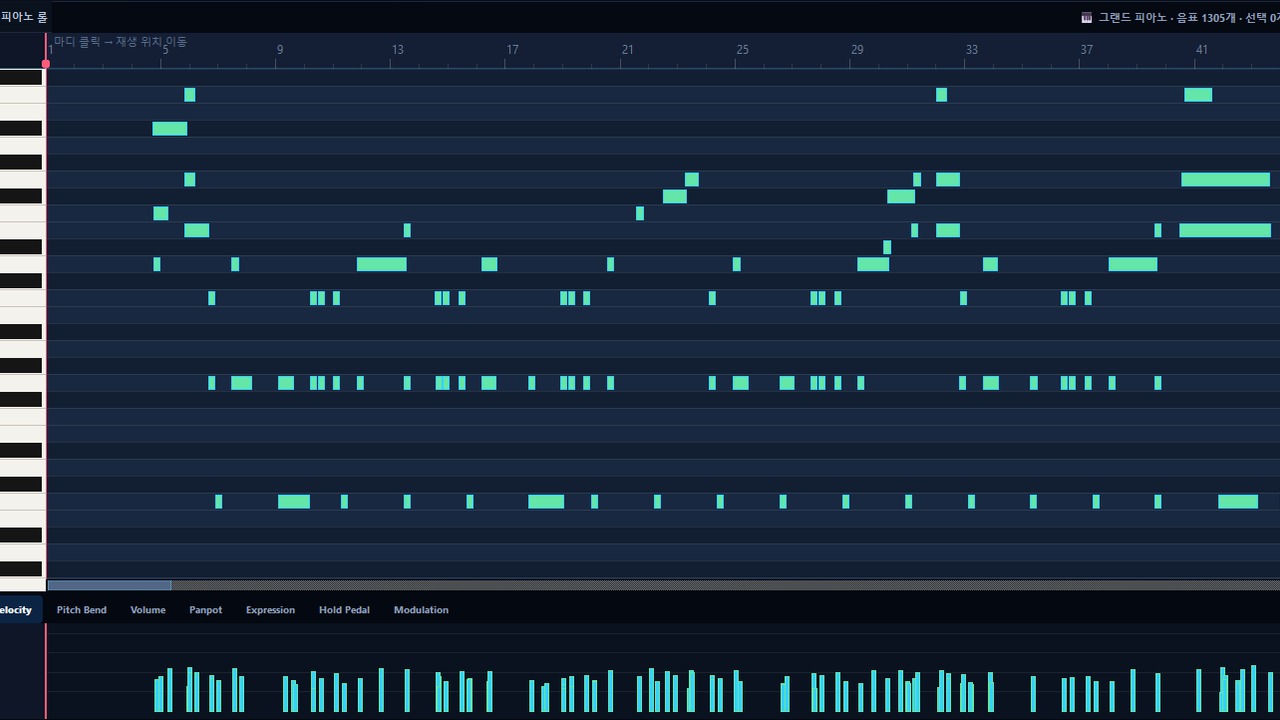
Finally the predictions are assembled into a MIDI timeline, applying musical structure ? placing notes on a time grid, grouping them into voices or tracks, and producing a coherent file. The audio and score paths converge here: however the notes were predicted, they end as the same kind of structured MIDI, with confidence information flagging where the model was uncertain.
The model's job: predicting notes from features
Following one measure through the pipeline
Imagine a single measure of a piano piece in C major ? a C-major chord under a melody note E ? fed to MidiAI Studio as audio. Watching it travel the pipeline makes the whole process concrete.
First the audio of that measure becomes a time-frequency picture showing energy at the frequencies of C, E, G, and the melody E. The model reads this picture and predicts the notes: it recognizes the chord's pattern and the melody riding above it, outputting the pitches with their onsets and durations, and flags nothing as uncertain because the texture is clear.
Finally the predictions are placed on the measure's time grid, the chord and melody separated appropriately, and written as MIDI. One measure, three stages ? preparation, prediction, assembly ? and the same path scales to a whole piece.
How audio and score pipelines diverge
- Understand input preparation. Know that raw input is first turned into a model-friendly representation ? a time-frequency picture for audio or a normalized staff for scores. This framing step shapes everything the model does next.
- Grasp that the model predicts, not measures. Recognize that the model outputs its best prediction of the notes based on learned patterns, not a certain measurement. This explains both its power and its occasional errors.
- See where audio and score paths differ. Appreciate that audio prediction reasons about frequencies while score prediction reads symbols, even though both end as MIDI. Knowing your input's path helps you anticipate its challenges.
- Follow the assembly into a timeline. Understand that predictions are placed on a time grid and organized into tracks to form coherent MIDI. Assembly is where isolated predictions become a usable file.
- Use confidence to guide your review. Let the pipeline's confidence flags direct your attention to uncertain passages. This turns your understanding of the process into efficient, targeted cleanup.
Assembling predictions into a MIDI timeline
- Give the pipeline clean input, since preparation quality shapes prediction quality.
- Remember predictions are probabilistic, so verify rather than assume perfection.
- Anticipate challenges based on whether your input is audio or a score.
- Trust the assembly for structure but check voice and track separation.
- Follow confidence flags to review efficiently.
Confidence, ambiguity, and honest output
- Treating the pipeline as infallible: Predictions are probabilistic, so assuming certainty leads to unverified errors.
- Feeding poor input: Preparation cannot fix a bad source, and weak input yields weak predictions.
- Ignoring the input-path differences: Expecting audio and score conversion to behave identically misjudges their distinct challenges.
- Overlooking assembly structure: Not checking voice and track separation leaves a technically-correct but disorganized file.
- Skipping confidence flags: Ignoring the pipeline's own uncertainty signals wastes its most useful guidance.
Why more context improves the result
Understanding the pipeline turns you from a passive user into an informed one, and that shift is genuinely empowering. When you know that everything begins with input preparation, you naturally invest in clean sources; when you know the model predicts rather than measures, you verify rather than blindly trust. The knowledge directly changes the habits that determine your results.
The prediction stage is the conceptual heart, and appreciating its probabilistic nature reframes both success and failure. A brilliant conversion is the model's confident pattern-match paying off; a shaky one is it reasoning under genuine ambiguity. Neither is magic nor malfunction ? both are the same predictive process meeting inputs of different clarity, which is exactly why source quality matters so much.
The human's role in the finished product
The convergence of the audio and score paths at assembly is a satisfying piece of the design. However differently the notes were predicted ? from frequencies or from symbols ? they become the same kind of structured MIDI, which is why the same editing skills and downstream workflows apply regardless of what you converted. The pipeline funnels diverse inputs into a common, usable output.
Perhaps the most important takeaway is where the human fits. The pipeline does the heavy lifting of turning input into a strong draft, but the final musical decisions ? verifying ambiguity, shaping expression, organizing structure ? remain yours. MidiAI Studio is best understood not as a replacement for musicianship but as a powerful front end to it, handling the mechanical translation so your judgment can focus on the music.
FAQ
Straight answers for musicians researching how AI MIDI models work. Expand any question?answers stay on this page so you do not bounce away mid-read.
What are the main stages of AI MIDI conversion?
Input preparation, model prediction, and assembly into a timeline. The input becomes a model-friendly representation, a trained model predicts the notes, and those predictions are organized into coherent MIDI.
Does AI MIDI conversion measure the notes or guess them?
It predicts them from learned patterns rather than measuring with certainty. Trained on many examples, the model outputs the notes most likely to have produced the input, which is why results are strong but not infallible.
How does converting audio differ from converting a score image?
Audio conversion turns sound into a time-frequency picture and reasons about frequencies, while score conversion locates and reads notation symbols. Both end as MIDI, but they solve different recognition problems along the way.
How are individual note predictions turned into a MIDI file?
They are assembled onto a time grid, grouped into voices or tracks, and written with musical structure. This assembly stage is where isolated predictions become a coherent, usable timeline.
Why does giving the converter cleaner input produce better results?
Because the preparation stage frames the problem from the input, and a clean input yields a clear representation the model can read accurately. Poor input produces a muddy representation and weaker predictions.