 MidiAI Studio
Guide �� AI & MIDI fundamentals
Understanding MIDI Files From Scratch
If you are new to MIDI, the concept can seem oddly slippery ? it is a music file that contains no sound, which sounds like a contradiction until you understand what it does hold. This guide starts from zero and builds a clear, confident picture with no assumed background.
MIDI has been quietly powering music technology for decades, and understanding it unlocks a huge range of creative possibilities, from editing performances to converting recordings into editable notes. The learning curve is gentler than it looks once the core idea clicks.
By the end of this guide you will understand what a MIDI file is, why it behaves the way it does, and how to start using one ? including files produced by tools like MidiAI Studio. Think of this as the friendly on-ramp to everything else.
What the letters M-I-D-I actually stand for
A MIDI file is a document that stores musical performance information ? which notes are played, when they start, how long they last, and how hard they are struck ? as a list of events rather than as recorded sound. MIDI stands for Musical Instrument Digital Interface.
The crucial thing for a beginner to grasp is that a MIDI file contains instructions, not audio. It is like sheet music for a computer: a description of what to play that only becomes sound when an instrument interprets it.
A MIDI file is a list of note events
At its heart, a MIDI file is a time-ordered list of events, the most important being note-on and note-off messages that say a particular note started or stopped, along with how hard it was played. Reading a MIDI file, a computer simply works through this list, triggering an instrument to play each note at the right moment.
Because the file holds no sound of its own, it needs an instrument ? a software synth, a sound library, or a hardware device ? to actually make noise. This is why the same MIDI file can sound like a piano on one setup and a flute on another, and why MidiAI Studio's converted MIDI can be voiced with any instrument you choose. The notes are fixed; the sound is up to you.
MIDI organizes music using channels and tracks, which keep different parts separate ? the melody on one, the bass on another ? so they can be edited and voiced independently. A convention called General MIDI standardizes a basic set of instrument sounds, which is why a MIDI file can play recognizably across different devices even though the exact sound quality varies.
Why a MIDI file needs an instrument to make sound
Opening your first converted MIDI file
Imagine you have just converted a simple tune in C major with MidiAI Studio and you open the resulting MIDI file for the first time. At first it may seem to do nothing ? there is no sound baked in ? but that is exactly as expected.
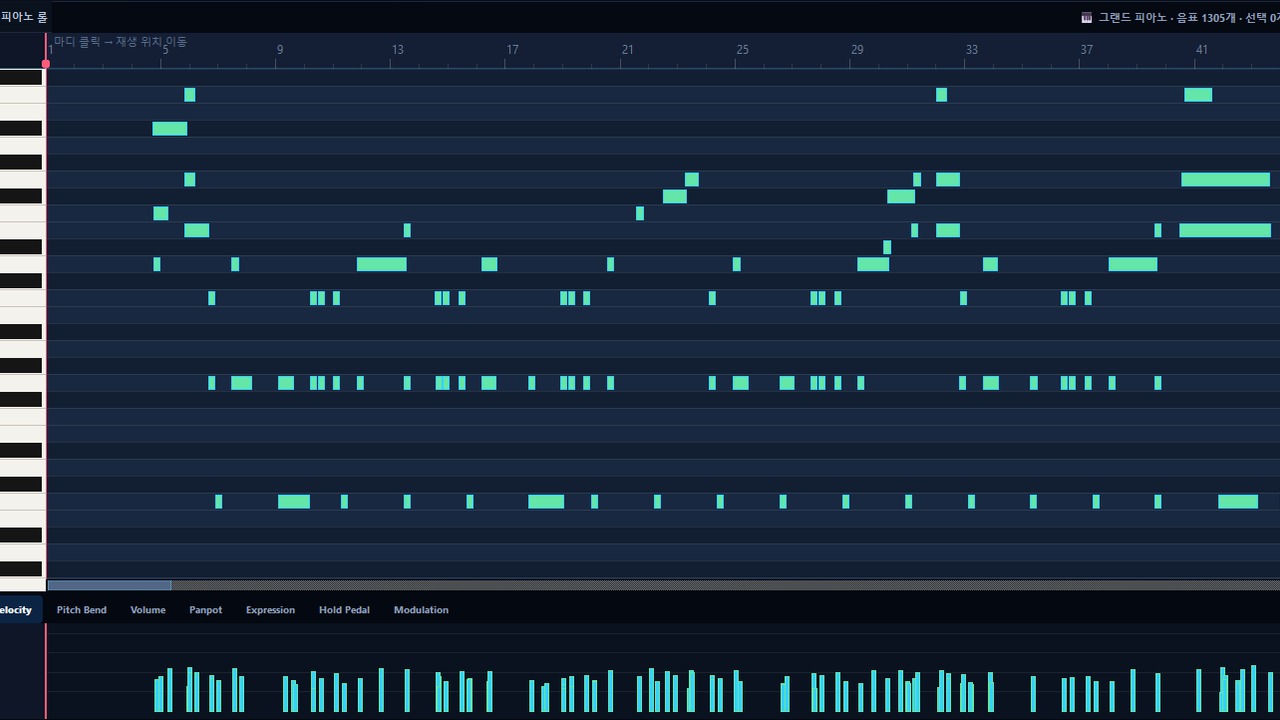
When you load it into a music program and assign a piano instrument, the tune plays back. You see the notes laid out as bars in a piano roll, each one an event you can click, move, or delete. Switching the instrument to a guitar sound, the same notes now play on guitar ? proof that the file holds notes, not sound.
This first encounter teaches the whole concept viscerally: the MIDI file is a set of instructions, the instrument provides the voice, and the notes are yours to edit. Once this clicks, MIDI stops being mysterious and starts being useful.
Channels and tracks: keeping parts organized
- Understand what the file holds. Grasp that a MIDI file stores note events, not sound. This single realization explains why it seems silent on its own and why it needs an instrument to be heard.
- Open it in a music program. Load the MIDI file into any DAW or MIDI-capable program. The program is what reads the event list and gives you a view of the notes to work with.
- Assign an instrument. Give the MIDI a sound by loading an instrument, since the file carries none. This is the step that turns the silent instructions into audible music.
- Explore the notes. Look at the notes in the piano roll and try clicking, moving, or deleting one. Seeing notes as editable events makes MIDI's flexibility concrete.
- Try changing the sound. Swap the instrument to hear the same notes played differently. This demonstrates directly that the file holds notes independent of any particular sound.
General MIDI and why sounds vary
- Remember that a silent MIDI file is normal ? it needs an instrument.
- Start in any beginner-friendly music program rather than seeking special software.
- Explore the piano roll to build an intuition for notes as events.
- Experiment with different instrument sounds on the same file.
- Keep early files simple so the concepts stay clear.
Opening and playing your first MIDI file
- Expecting a MIDI file to play sound alone: It holds instructions, not audio, so it needs an instrument assigned to be heard.
- Thinking MIDI is low quality: Any thin sound comes from the instrument, not the MIDI, which simply carries the notes.
- Assuming it sounds the same everywhere: Because sound depends on the instrument, the same file varies between setups.
- Avoiding the piano roll: Skipping the note view misses the intuition that makes MIDI's editing power clear.
- Starting with overly complex files: Dense files obscure the basics; simple ones make the concepts easy to see.
What you can do with a MIDI file
The mental hurdle every beginner clears is accepting that a music file can contain no music-as-sound and still be immensely useful. Once you reframe MIDI as sheet music for a computer ? a description of what to play rather than a recording of it being played ? the apparent contradiction dissolves and the format's logic becomes intuitive. That reframing is the whole beginning of MIDI literacy.
The separation of notes from sound, which confuses newcomers, is actually MIDI's greatest gift. Because the file specifies what to play but not how it sounds, one set of notes can become a piano, an orchestra, or a synth at your whim, and can be edited endlessly without degradation. What looks like a limitation ? the silence ? is the source of the flexibility.
Common beginner surprises and how to handle them
Understanding channels and tracks early pays off quickly, because organized parts are what make MIDI pleasant to work with. When a MidiAI Studio conversion arrives with the melody and bass on separate tracks, editing and voicing each is simple, whereas everything crammed together is a chore. Appreciating this structure from the start builds good habits.
The encouraging truth for any beginner is that these fundamentals are genuinely all you need to start, and everything more advanced builds gently on them. Notes as events, instruments as voices, tracks as organization ? with these three ideas you can open, play, edit, and enjoy MIDI files today, and grow into the deeper possibilities at your own pace.
FAQ
Straight answers for musicians researching beginner guide to MIDI files. Expand any question?answers stay on this page so you do not bounce away mid-read.
What does MIDI actually stand for?
Musical Instrument Digital Interface. It is a standard for representing musical performance as data ? which notes play, when, how long, and how hard ? rather than as recorded sound.
Why doesn't my MIDI file make any sound when I open it?
Because a MIDI file stores note instructions, not audio, so it needs an instrument to produce sound. Loading it into a music program and assigning an instrument is what makes it audible.
Why does the same MIDI file sound different on different computers?
Because MIDI depends on whatever instrument or sound source plays it, and those differ between setups. The notes are the same everywhere, but the voice rendering them varies.
Is MIDI lower quality than a normal music file?
Not inherently ? any thinness comes from the instrument playing it, not the MIDI itself. With a high-quality instrument, MIDI can sound excellent, because it simply carries the notes for that instrument to perform.
What can I actually do with a MIDI file as a beginner?
You can play it with any instrument, edit its notes freely, transpose it, change its tempo, and rearrange it. Because it stores editable events rather than fixed sound, it is far more flexible than an audio recording.