 MidiAI Studio
Landing · PDF to MIDI
PDF to MIDI Converter
PDF to MIDI helps musicians turn engraved or scanned scores into editable note data for practice, arranging, and production.
What is PDF to MIDI?
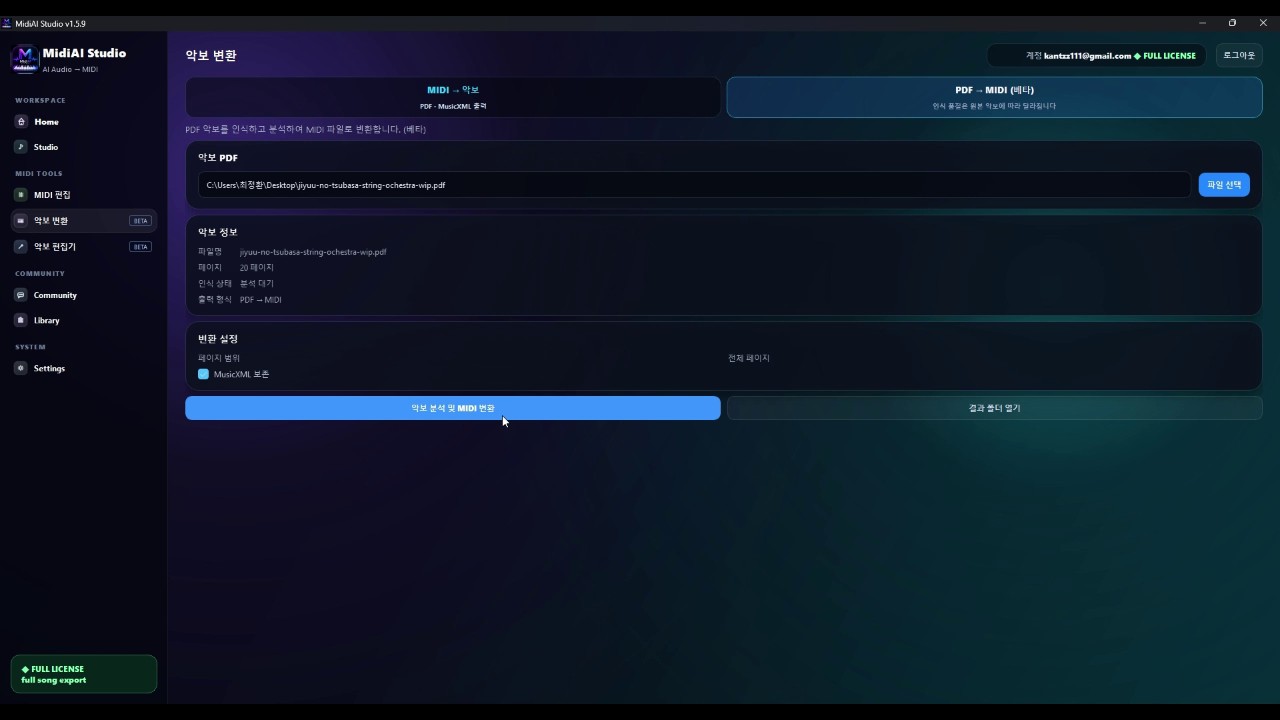
PDF to MIDI conversion uses optical music recognition (OMR) and symbolic mapping to transform sheet music pages into MIDI note events.
How it works
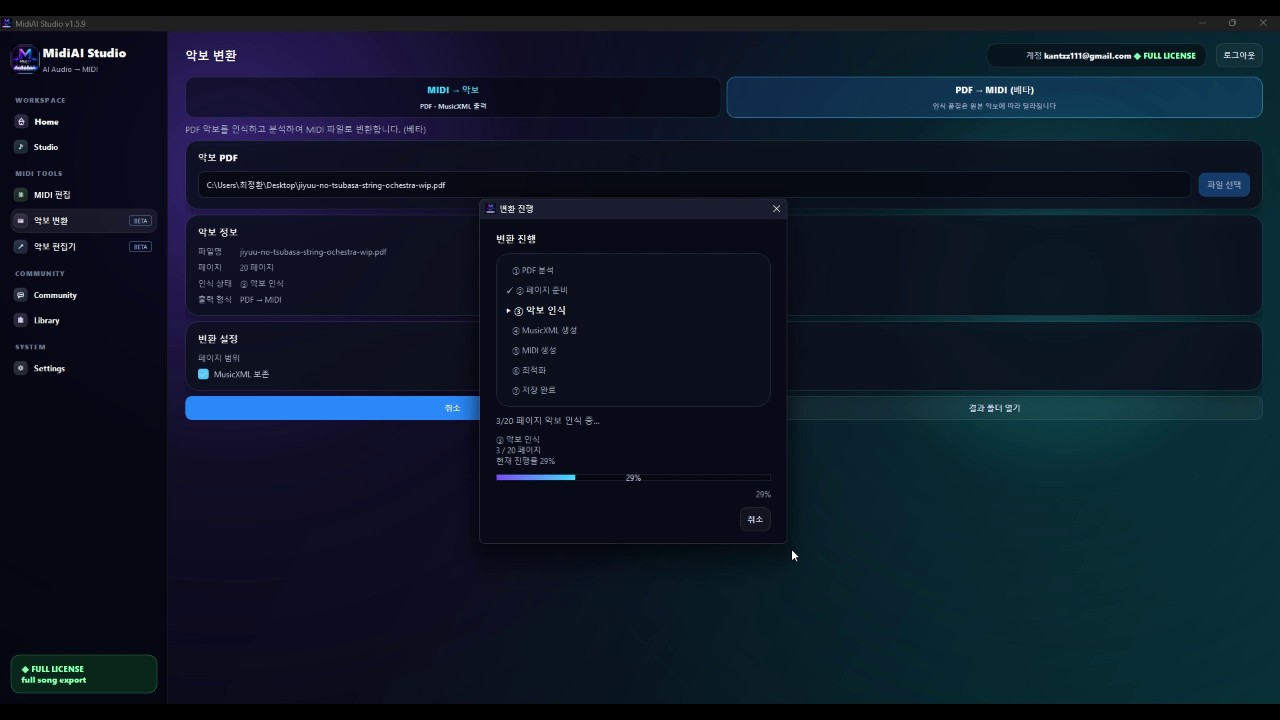
You provide a clear PDF score, the system recognizes musical symbols, then you inspect and edit the resulting MIDI before export.
- Prepare a high-contrast, correctly oriented PDF.
- Convert with MidiAI Studio’s score-related tools.
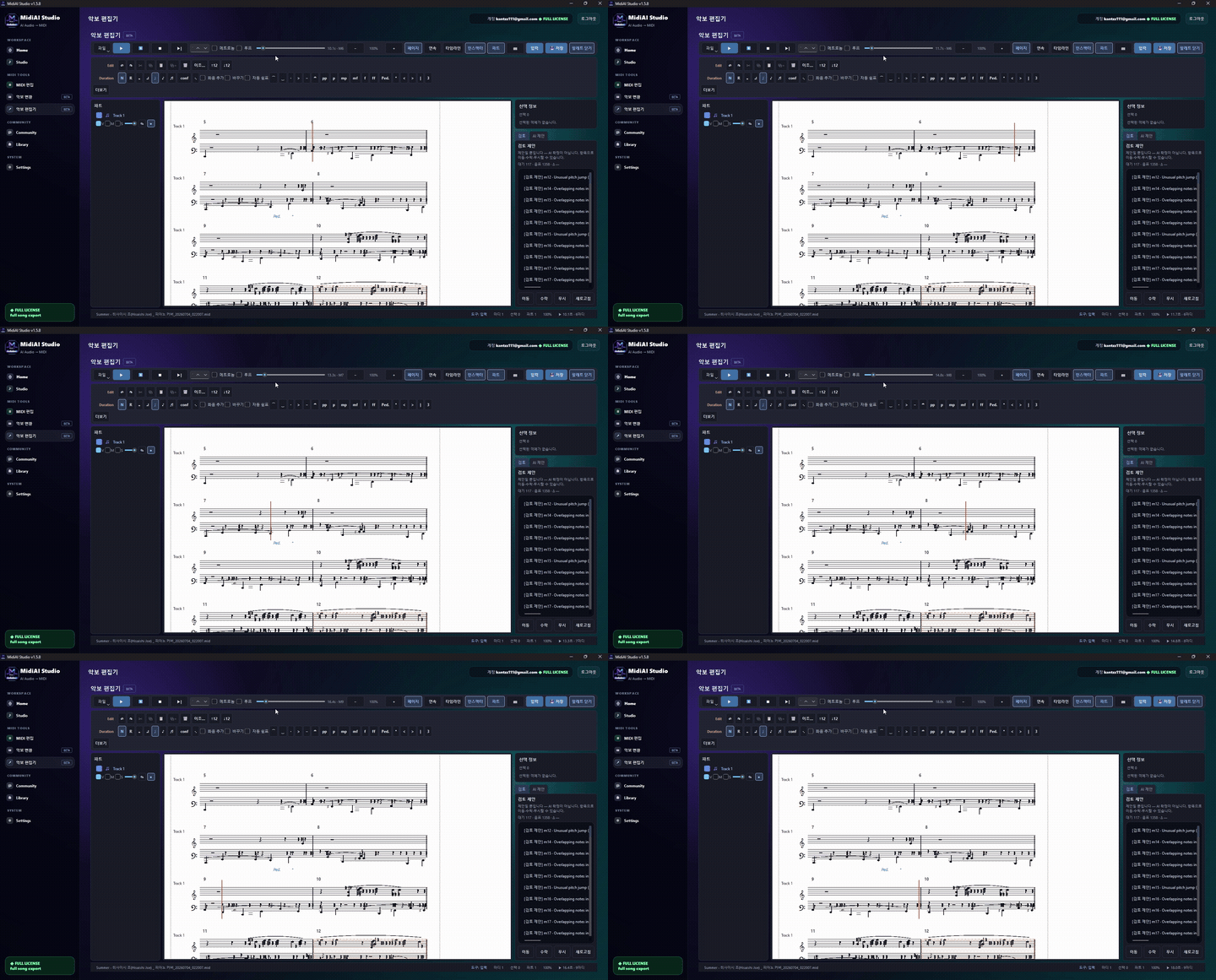
- Fix voices, rhythms, and octave errors in the editor.
- Export MIDI or continue to MusicXML/PDF as needed.
Features that matter for PDF to MIDI
- Windows desktop conversion workflow
- MIDI editing after recognition
- Score interchange awareness (MusicXML/PDF paths)
- Official support, FAQ, and patch notes
Screenshots
FAQ
What is PDF to MIDI?
PDF to MIDI conversion uses optical music recognition (OMR) and symbolic mapping to transform sheet music pages into MIDI note events.
How do I get better accuracy?
Use cleaner sources, convert shorter sections first, and always edit the MIDI draft. See best practices below.
Does MidiAI Studio support this workflow?
Yes. MidiAI Studio is built for AI MIDI conversion on Windows with editing and score-related export paths. Start from the downloads page.
Is this free?
A free trial download is available. Lifetime licensing unlocks full conversion and editing capabilities—see the purchase page for current pricing.
Where is company / support information?
See the about page for publisher details, patch notes for version history, and support for 1:1 help.
Deeper notes for long-term skill
Treat every conversion as a small research project. Write down what failed: was it source noise, extreme polyphony, unclear engraving, or tempo drift? That log becomes your personal accuracy playbook and compounds faster than randomly retrying settings.
Build a template project in your DAW with favorite piano, pad, and bass instruments ready for converted MIDI. The less friction between “export MIDI” and “hear something musical,” the more consistently you’ll finish edits instead of abandoning drafts.
When collaborating, send both the MIDI and a short note about assumed tempo, key, and leftover problem measures. Clear communication prevents partners from “fixing” musical choices that were intentional.
Revisit older conversions after software updates. Converter quality improves over time; a file that needed heavy cleanup last quarter may need less work after a patch. Check the official patch notes before large batch jobs.
Finally, keep ethics close to craft. Use conversions to learn, arrange, and create—not to misrepresent authorship. Crediting sources and respecting rights is part of professional musicianship in the AI era.
Checklist before you publish or share
- Verify key signature and tempo map.
- Scan for overlapping note duplicates.
- Confirm instrument mapping and octave placement.
- Listen once without looking at the piano roll.
- Listen again focusing only on rhythm.
- Export a dated filename (project-title-v03.mid).
Additional practice tip: isolate one musical dimension per listen-pass—pitch only, then rhythm only, then dynamics only. Separating attention reveals different error classes that a single casual listen will miss, especially after dense passages.